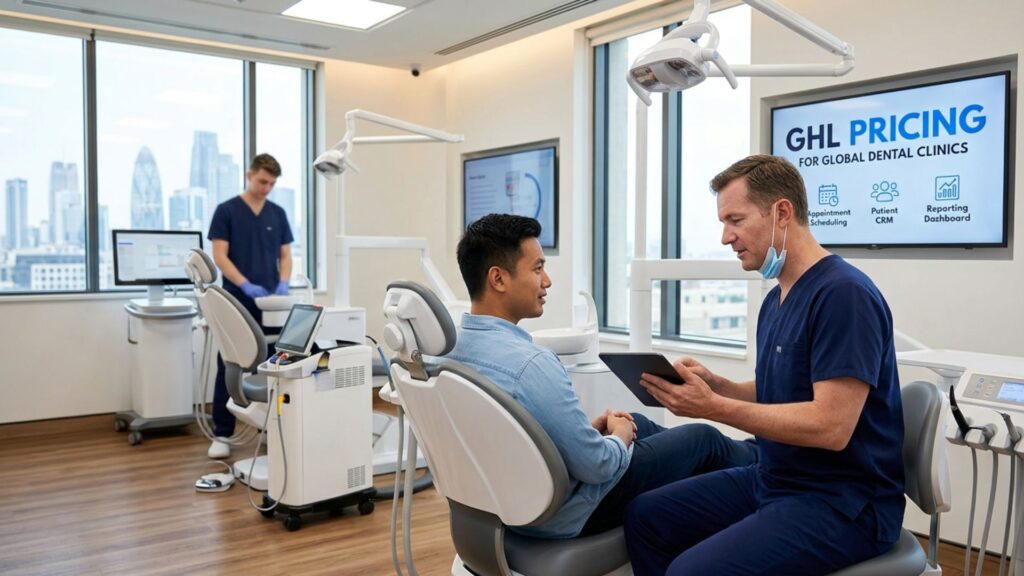
As a dental clinic owner, you have spent years perfecting your clinical skills. You understand occlusion, endodontics, and aesthetic restoration. However, in the modern landscape of global dentistry, the most common cause of stagnant revenue isn’t a lack of clinical skill—it is a leaky bucket in operations.GHL Pricing for Global Dental Clinics
Most clinics operate on a “hero-based” model. The front desk staff is expected to handle incoming calls, manage insurance claims, confirm appointments, and greet patients simultaneously. When the phone rings while a patient is checking out, one of two things happens: the call goes to voicemail, or the patient in front of them feels ignored.
This operational friction creates “silent revenue leakage.” To scale a practice without burning out your staff, you must transition from a hero-based model to a system-based model.
What “Intelligence” Means in a Modern Dental Clinic
In a clinical setting, we value diagnostic intelligence. We use 3D imaging and digital sensors to see what the naked eye cannot. Yet, many owners manage their business “blind.” They don’t know exactly how many leads were generated last month, why 15% of patients failed to show up, or how much revenue was lost to unreturned missed calls.GHL Pricing for Global Dental Clinics
1. Human Intelligence
Your team’s time is your most expensive asset. Their intelligence should be reserved for high-value tasks: patient empathy, complex treatment coordination, and chairside assistance. When you force a highly skilled office manager to spend four hours a day sending manual appointment reminders, you are misallocating “human intelligence.”
2. System Intelligence
System intelligence refers to the infrastructure that works while your team is busy. It is the digital “connective tissue” that ensures no patient falls through the cracks. This involves:
- Centralized Communication: Every SMS, email, and DM in one view.
- Predictable Follow-ups: Automatically checking in on a patient 48 hours after a deep scaling.
- The “Safety Net”: A system that recognizes a missed call and immediately sends a text: “Sorry we missed you! Are you looking to book an appointment?”GHL Pricing for Global Dental Clinics
Transitioning to Automation: The Role of GoHighLevel (GHL)
To implement these systems, you need a robust engine. In the healthcare space, GoHighLevel (GHL) has emerged as a leading infrastructure tool because it consolidates multiple softwares—SMS marketing, email, funnel building, and CRM—into one dashboard.GHL Pricing for Global Dental Clinics
When evaluating GHL Pricing for Global Dental Clinics, it is vital to view it not as a “marketing expense,” but as an operational utility. Similar to how you pay for electricity or high-speed internet, a CRM is the utility that powers your patient acquisition and retention.GHL Pricing for Global Dental ClinicsGHL Pricing for Global Dental Clinics
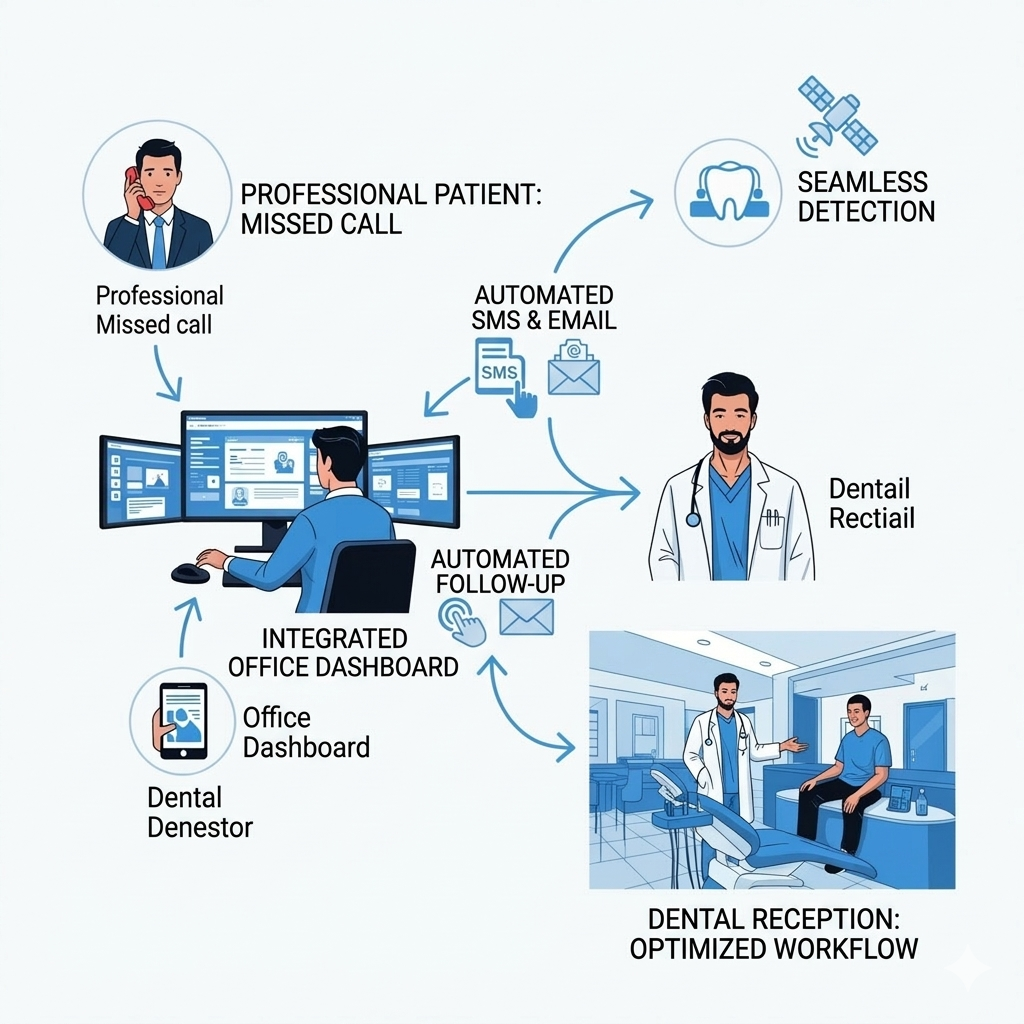
Solving the “Missed Call” Leakage
Data suggests that over 30% of new patient calls to dental clinics go unanswered during peak hours or lunch breaks. Most callers will not leave a voicemail; they will simply click the next dentist on Google.GHL Pricing for Global Dental ClinicsGHL Pricing for Global Dental Clinics
GHL allows for “Missed Call Text Back.” Within seconds of a missed call, the system initiates a conversation. This saves the lead before they move to a competitor.
Reducing No-Show Economics
A vacant chair is the most expensive thing in a dental office. If your average hourly production is $300, a single no-show per day costs the clinic over $70,000 annually. Automated, multi-channel reminders (Email + SMS) significantly “nudge” patient behavior without requiring a staff member to pick up the phone.
For More Information
Understanding GHL Pricing for Global Dental Clinics
For a global practice, the cost-to-value ratio of GHL is unique. Whether you are operating in London, Dubai, or New York, the software provides a unified way to track “Patient Lifetime Value” (PLV).
Typically, clinics spend money on separate tools:
- Email Marketing Tool: $50/mo
- SMS Automation: $40/mo
- Review Management: $100/mo
- Funnel/Landing Page Builder: $97/mo
By consolidating these into a single GHL plan, clinics often reduce their “tech stack” costs while increasing data transparency. Instead of fragmented data, you see the entire journey from the first click on a “Dental Implant” ad to the final payment.
Strategic Thought: If your clinic loses even five missed calls per week, that is silent revenue walking away. A structured automation system prevents that leak by capturing interest the moment it happens.
Note: The link below is an affiliate link. I only recommend systems that align with structured clinic growth.
Real-World Scenarios: From Chaos to Control
Scenario A: The “Implant Lead” Follow-up
A patient downloads a guide on “Dental Implants” from your website at 9:00 PM.
- Without Systems: The office manager sees the email at 10:00 AM the next day, tries to call, gets no answer, and the lead is forgotten.
- With GHL Systems: The moment the guide is downloaded, the patient receives a text thanking them and offering a link to book a consultation. If they don’t book, the system sends a follow-up video 48 hours later explaining the clinic’s technology.
Scenario B: The Post-Op Check-in
Patient retention is built on the feeling of being cared for. Automated workflows can trigger a “How are you feeling?” text at 6:00 PM for any patient who had an extraction that morning. It requires zero effort from your staff but creates immense patient loyalty.
| Feature | Manual Model (Hero-based) | GHL Model (System-based) |
| Missed Calls | Call miss ho jati hai aur lead dusre dentist ke paas chali jati hai. | Missed Call Text Back: Turant automated reply jata hai aur lead save ho jati hai. |
| Appointment Reminders | Staff ko manually calls/texts karne padte hain (Time-consuming). | Automated Reminders: SMS aur Email ke zariye automatic follow-ups hote hain. |
| New Lead Follow-up | Office manager ke free hone ka intezar (Slow response). | Instant Nurture: Lead aate hi turant educational content aur booking link chala jata hai. |
| Google Reviews | Staff ko mangna bhool jata hai (Slow review growth). | Review Velocity: Appointment khatam hote hi automatic review request SMS jata hai. |
| Patient Retention | Purane patients ko bhool jana aam baat hai. | Reactivation Engine: Purane dormant patients ko automatically “We Miss You” messages jate hain. |
| Staff Productivity | Staff routine tasks mein fasa rehta hai. | Staff high-value kaam aur patient care par focus karta hai. |
Common Mistakes in Dental CRM Implementation
Even the best tools fail if implemented poorly. Here are the pitfalls I see most often in global clinics:
- Over-Automation: Patients want to know they are talking to a human eventually. Automation should facilitate the human connection, not replace it.
- Ignoring the Data: If you have GHL but never check the “Opportunity Pipeline,” you are flying blind. Use the dashboard to see where patients are dropping off.
- Complex Workflows: Start simple. Automate missed calls and appointment reminders first. Once those are stable, move to complex nurture sequences.
Managing a clinic across different regions also requires compliance awareness, such as GDPR in Europe or HIPAA in the US. Modern CRMs are designed to help you maintain these standards while keeping your data organized. According to the American Dental Association (ADA), maintaining clear patient communication is a cornerstone of effective practice management.
The Future of Structured Clinics
The dental industry is moving toward “Centralized Operations.” Large Dental Service Organizations (DSOs) already use these systems to out-compete smaller private practices. They use data to drive every decision.
For the independent clinic owner, adopting a system like GHL is the only way to level the playing field. It allows you to provide a “concierge” experience at scale, ensuring every patient feels like your only patient.
Effective management isn’t about working more hours; it’s about making sure the hours you do work are spent on the highest-level tasks. Automation handles the “noise” so you can focus on the “signal”—the dentistry.
Strategic Thought: Scaling a clinic shouldn’t mean adding more stress to your front desk. By implementing a digital infrastructure, you create a self-sustaining environment where growth is a byproduct of the system.
[Start Building a Smarter Dental System](INSERT YOUR AFFILIATE LINK HERE)
Conclusion: The Path to Revenue Stabilization
Dental growth does not come from better dentistry alone; it comes from intelligent systems. By understanding the nuances of GHL Pricing for Global Dental Clinics, you can move away from the “leaky bucket” model of management and toward a predictable, scalable practice.
When you centralize your communications and automate your follow-ups, you don’t just increase your revenue—you buy back your time and the time of your staff. This reduces burnout and allows your team to focus on providing world-class patient care.
Frequently Asked Questions (FAQs)
1. Is GoHighLevel difficult to set up for a dental office? While the platform is powerful, the initial setup requires a clear map of your clinic’s workflow. Many clinics choose to work with a strategist or use dental-specific snapshots (templates) to get started quickly.
2. How does GHL compare to traditional dental software like Dentrix or Open Dental? GHL is not a replacement for your Practice Management Software (PMS). It sits “on top” of it as a marketing and communication engine. While your PMS handles clinical records and billing, GHL handles the patient journey, lead generation, and automated follow-ups.
3. Does this work for clinics outside of the United States? Yes. As we analyzed in GHL Pricing for Global Dental Clinics, the system is used worldwide. You simply need to integrate a local SMS provider (like Twilio) that operates in your specific country.
4. Can I automate my Google Reviews through this system? Absolutely. One of the most effective workflows is triggering a “Review Request” SMS 2 hours after a patient’s appointment is marked as “completed” in the CRM.
Final Thought: Precision in the operatory must be matched by precision in the office. A system that tracks every lead and nurtures every patient is no longer a luxury—it is a requirement for the modern global clinic.
[Start Building a Smarter Dental System](INSERT YOUR AFFILIATE LINK HERE)
In the first part of our analysis, we established that clinical skill alone cannot plug the “leaky bucket” of a dental practice. We explored how GHL Pricing for Global Dental Clinics acts as an operational utility rather than just a marketing expense.
Now, we shift from the “Why” to the “How.” To move a clinic from manual chaos to automated precision, we must engineer the Patient Lifecycle. This is the difference between a patient who visits once for an emergency and a patient who stays for a decade.
The Anatomy of an Automated Patient Journey
A “systemized” clinic does not wait for the phone to ring. It creates a digital environment that guides a prospect from a curious click to a seated patient.
1. The Reactivation Engine
The most undervalued asset in any global dental clinic is the Existing Database. Most clinics have thousands of “dormant” files—patients who haven’t been seen in 12–24 months.
- The Manual Way: A receptionist spends three days calling old files, leaving voicemails that are never returned.
- The Systemized Way: A GHL workflow filters patients who haven’t booked in 18 months and sends a personalized “We Miss You” SMS with a direct booking link for a hygiene checkup.
2. The High-Value Treatment Pipeline
For complex procedures like All-on-4 implants or Invisalign, the decision cycle is long. A patient rarely commits on the first call.
- System Intelligence: When a lead enters the “Implant Pipeline,” they receive a “Nurture Sequence.” This isn’t spam; it is educational content—videos of the lead dentist explaining the procedure, patient testimonials, and financing options.
Managing the “Front-Desk Overload”
The primary cause of staff burnout in dental clinics is Micro-Tasking. When an office manager has to toggle between 10 different tabs to send a reminder, check a review, and reply to a Facebook message, errors happen.
By centralizing these into one dashboard, the “Cognitive Load” on your staff is reduced. They no longer “manage software”; they “manage patients.”
Strategic Thought: If your front desk spends 2 hours a day on manual confirmations, that is 10 hours a week of lost productivity. Automation doesn’t replace your staff; it promotes them to higher-level patient coordination.
Note: The link below is an affiliate link. I only recommend systems that align with structured clinic growth.
[Start Building a Smarter Dental System](INSERT YOUR AFFILIATE LINK HERE)
Real-World Scenario: The “Emergency” Capture
Imagine it is 11:00 PM on a Saturday. A potential patient has a toothache. They search for “Emergency Dentist” and find your site.
- The Old Way: They see a “Contact Us” form. They fill it out. They wait until Monday morning for a reply. By then, they have already called a competitor who answered first.
- The GHL Way: They click an automated Chat Widget. The system asks, “Is this an emergency?” They say “Yes.” The system immediately sends them a link to your Monday morning ‘Emergency Slot’ and sends a notification to your On-Call manager.
This level of responsiveness is what separates a $500k clinic from a $2M clinic. It’s about being available without being present.
The Economic Impact of “Review Velocity”
In the global dental market, social proof is your secondary currency. Google’s algorithm prioritizes clinics with Velocity (frequent, new reviews) over those with just a high score from three years ago.
A structured system automates this at the point of satisfaction. When the “Check-out” status is triggered in your CRM, a text is sent: “It was great seeing you today! Would you mind sharing your experience?” This creates a hands-free reputation engine that continuously improves your SEO and trust factor.
Common Operational Mistakes: “The Set-it-and-Forget-it” Myth
The biggest mistake owners make after looking into GHL Pricing for Global Dental Clinics is assuming the software does the work for them.
- The Solution: You need a “System Pilot.” This is either a trained lead at your front desk or an external specialist who reviews the “Attribution Data” once a week.
- The Goal: You should be able to see exactly which ad campaign or referral source produced the highest “Show-up Rate,” not just the most leads.
According to industry benchmarks from Dental Economics, clinics that utilize integrated CRM systems see a 20-30% increase in case acceptance rates simply due to better follow-up consistency.
Conclusion: Scalability Without Chaos
The future of dentistry is not just digital impressions and 3D printing; it is the Digital Patient Experience. As a clinic owner, your goal is to create a “Predictable Revenue Machine.”
When you invest in a system like GoHighLevel, you are building an asset. You are creating a practice that can run efficiently whether you are in the operatory or on vacation. You are moving from a practice that relies on luck to a practice that relies on logic.
Strategic Thought: Transparency is the enemy of inefficiency. When you can see every lead, every missed call, and every dollar of potential revenue in one dashboard, you finally gain true control over your business.
[Start Building a Smarter Dental System](INSERT YOUR AFFILIATE LINK HERE)
Frequently Asked Questions (Part 2)
1. Can GHL integrate with my current dental imaging software? Generally, GHL stays on the “Patient Acquisition” side. It integrates with your scheduling via tools like Zapier or direct API for many Practice Management Systems, ensuring your calendar stays synced without double-booking.
2. How do I handle multi-location clinics with GHL? This is where GHL shines. You can have a “Snapshot” (a pre-built template of all your dental automations) and deploy it across 5, 10, or 50 locations instantly, ensuring a consistent brand experience at every clinic.
3. Is the “Missed Call Text Back” feature expensive to run? No. Most global clinics find that the cost of the few cents per SMS is negligible compared to the $150–$3,000 value of a new patient that would have otherwise been lost.
4. How does the system handle “No-Shows”? Beyond reminders, the system can trigger a “Re-booking Sequence” the moment a patient is marked as a “No-Show,” asking them to reschedule immediately while the intent is still high.
[Start Building a Smarter Dental System](INSERT YOUR AFFILIATE LINK HERE)